K-Manners in South Korea for International Students

Learn the everyday etiquette that helps students settle into Korean life with confidence. From formal language and respectful body language to dining customs, road safety, and recycling rules, this page turns essential cultural guidance into a simple, modern web experience.

Respect opens doors in South Korea

In South Korea, small habits often speak louder than words. The way you bow, pass an item, wait for elders, or speak to a professor can shape first impressions quickly. For students, good manners help build trust, avoid misunderstandings, and make academic and social life smoother.

Formal speech

Important in classrooms, public settings, and professional spaces.

Two-handed gestures

A safe and respectful way to give, receive, or serve.

Hierarchy awareness

Age and seniority strongly influence social behavior.

Daily discipline

Dining, crossing roads, and sorting waste are all rule-based.

Using formal tone and body language

In Korean society, speaking politely is not optional in formal situations. It shows cultural understanding, emotional maturity, and respect for hierarchy.

The hierarchy of speech levels

  • Hasipsio-che (-seumnida) – used in interviews, public speaking, official settings, and highly formal situations.
  • Haeyo-che (-yo) – the safest polite choice for professors, strangers, neighbours, and older people.
  • Banmal – casual speech for close friends of the same age or younger, and only after comfort is established.

Best practice by setting

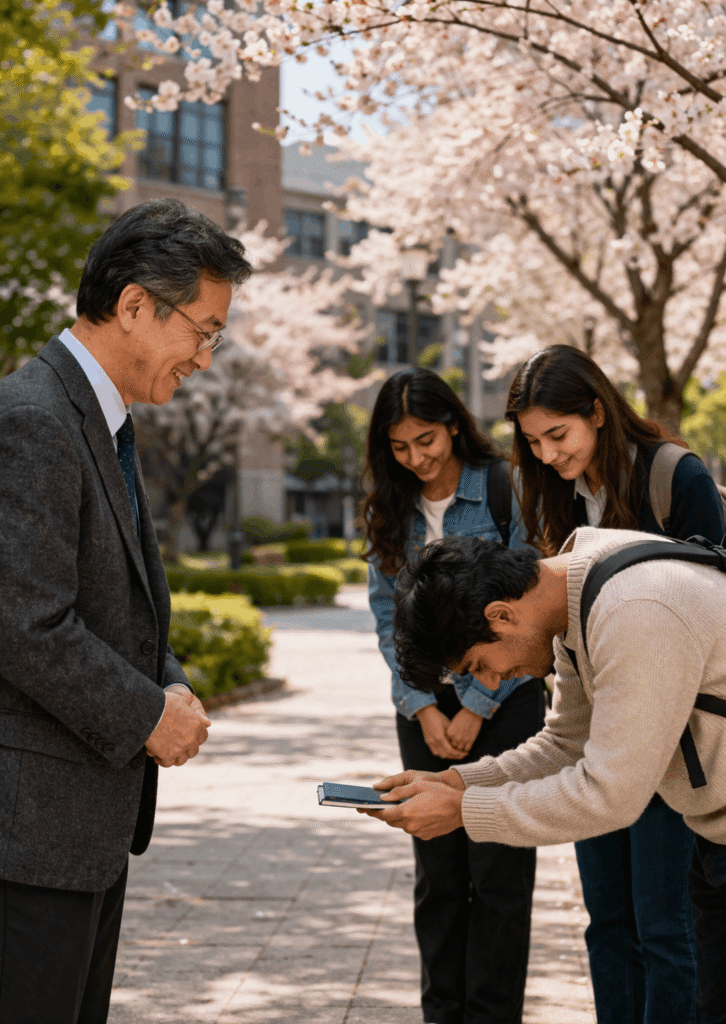
  • University: Address professors as Gyosu-nim, bow lightly, and hand over documents with both hands.
  • Workplace: Stay polite with seniors and bosses, even if the environment feels friendly.
  • Presentations: Use a formal tone, stand straight, and gesture with an open palm instead of one finger.
  • Neighbours and strangers: A small bow and “Annyeonghaseyo” goes a long way.

The Gongsu position

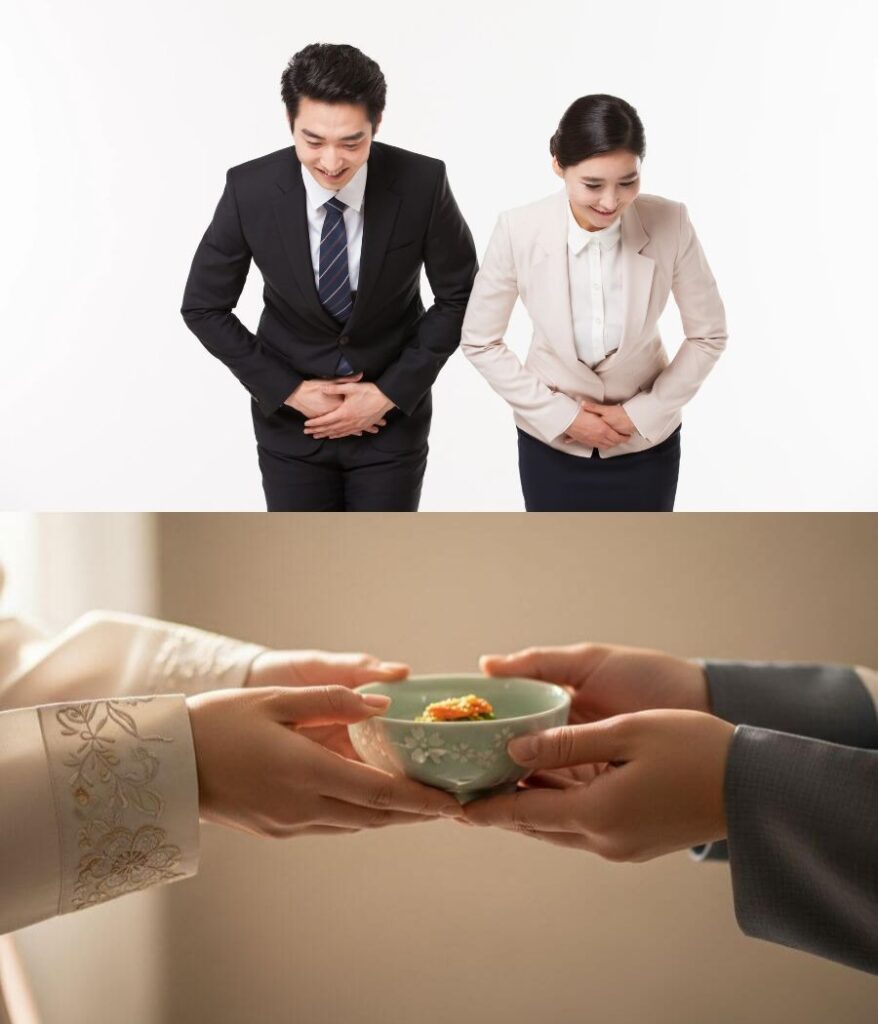
A traditional respectful hand posture used during formal events or while listening to a senior. Hands rest near the navel with relaxed shoulders and calm posture.

The two-handed rule

Use both hands when giving or receiving business cards, gifts, money, or papers. If one hand is busy, support the active arm with the other hand.

Eye contact and space

In formal situations, intense eye contact with seniors can feel aggressive. Avoid touching, hugging, or patting strangers and older people.

Quick tip: If you are unsure what to do, use polite speech, bow slightly, and offer or receive with both hands. These habits solve most etiquette situations gracefully.

Drinking etiquette in South Korea

Group meals and drinking culture are closely tied to bonding and respect. Even if you do not drink alcohol, understanding the gestures is still valuable.

Core rules to remember

  • Do not pour your own drink in a formal gathering.
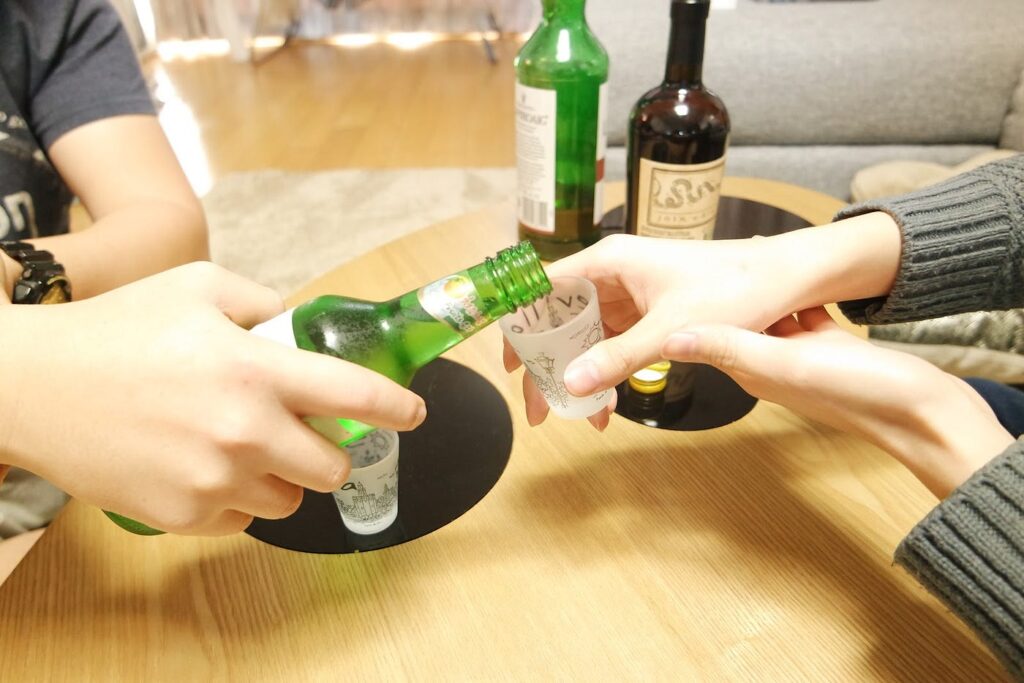
  • Use both hands when pouring or receiving a drink.
  • Wait for the most senior person to begin first.
  • When drinking in front of a senior, turn your face slightly away.
  • Keep your glass full if you want to slow down politely.

For students who do not drink

You can still join the social moment respectfully. Accept the gesture, join the toast, and participate with a soft drink if needed. The social respect matters as much as the drink itself.

ActionFormal SettingFriend Setting
PouringUse both hands or support the wrist.One hand may be acceptable, but polite support is still appreciated.
ReceivingHold the glass with both hands and bow slightly.Usually relaxed, but polite posture is still common.
DrinkingTurn away slightly from seniors.Face forward or turn only a little.
RefillingUsually after the glass is fully empty.When the drink is nearly finished.

Table manners and eating etiquette

Meals in Korea are about more than food. They reflect hierarchy, timing, cleanliness, and attention to the group.

Wait for elders

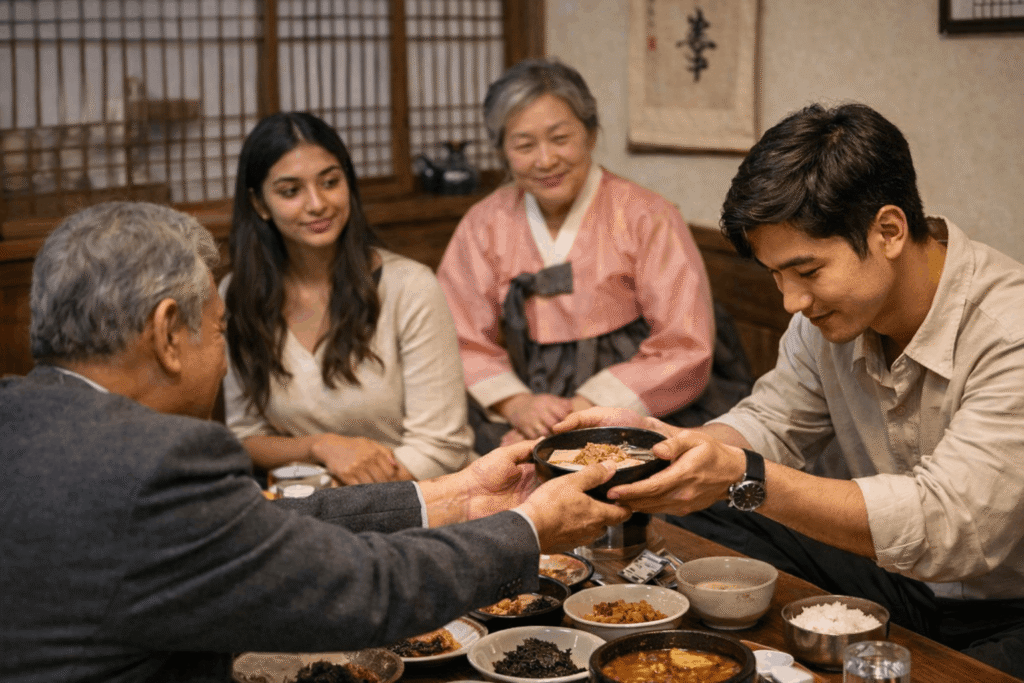
Never start eating before the eldest or senior-most person lifts their spoon or chopsticks first.

Use utensils correctly

Use the spoon for rice and soup, and chopsticks for side dishes. Do not hold both in one hand together.

Respect shared dishes

Take food from the nearest side, avoid searching for the “best” piece, and keep the table neat while eating.

Do

  • Match the pace of elders and seniors.
  • Pass dishes or menus with both hands to older people.
  • Say polite phrases before and after the meal.
  • Offer to grill or serve in Korean BBQ settings if you are the younger person.

Don’t

  • Do not stick chopsticks vertically into rice.
  • Do not lift rice or soup bowls to your mouth.
  • Do not blow your nose at the table.
  • Do not talk loudly with a full mouth in formal meals.

Traffic rules and road crossing

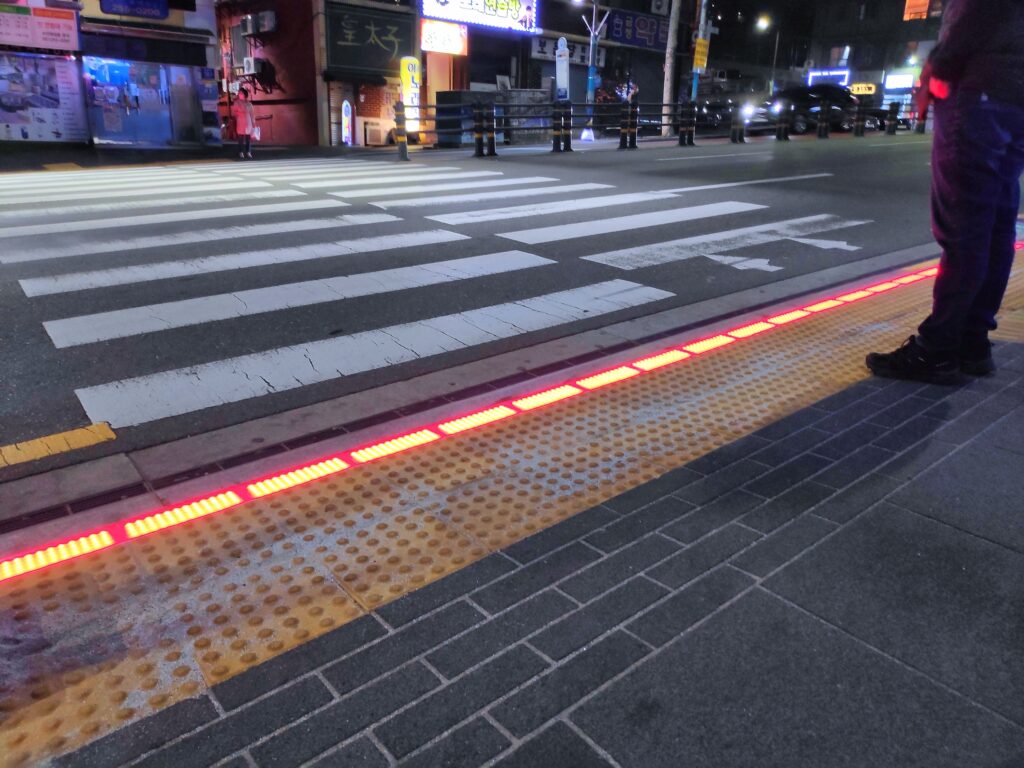
South Korea follows right-hand traffic, and road rules are enforced much more strictly than many students expect. Smart city infrastructure, floor LEDs, and CCTV make pedestrian discipline very important.

What students should remember

  • Look left-right-left before crossing.
  • Wait for the pedestrian signal, even on an empty road.
  • Watch for right-turning cars before stepping onto a zebra crossing.
  • Stay behind the tactile yellow safety strip on sidewalks and subway platforms.
  • Use Naver Maps or Kakao-based local transport apps for better route accuracy.

Public transport basics

  • Tap your T-Money card when entering and exiting buses.
  • Leave priority seats open for elderly, disabled, or pregnant passengers.
  • Do not use e-scooters without a helmet and valid license.

Crosswalk buttons

Some suburban roads use a real “push to cross” button. In busy city areas, the button you see is often for audible guidance and accessibility, not for speeding up the light.

Emergency help

Call 112 for police and 119 for medical or fire emergencies. Do not try to handle traffic accidents privately.

Recycling and waste separation

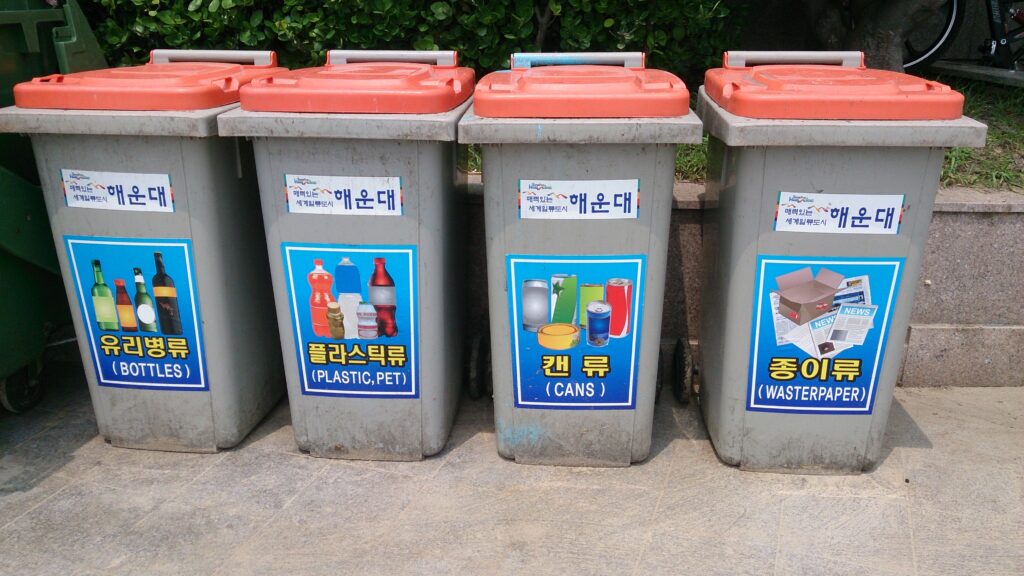
Waste sorting in South Korea is highly structured. Students are expected to separate garbage carefully, buy the correct district bags, and follow building disposal rules.

The 4 main waste categories

  • General waste: items that are not recyclable or edible for food-waste processing.
  • Food waste: leftover food that can be processed, excluding bones, shells, pits, and tough skins.
  • Recyclables: clean plastic, paper, cardboard, vinyl, cans, and selected Styrofoam.
  • Bulky waste: furniture, electronics, and large items that require a special sticker or district process.

Student survival tips

  • Buy the correct official district bag from local convenience stores.
  • Wash containers before recycling them.
  • Heavy food stains often mean the item belongs in general waste.
  • Check local disposal days if you live in a one-room or villa.

Apartment & dorm disposal

Usually handled at central collection stations with clearly marked bins and more frequent disposal options.

Studio & villa disposal

Often placed outside the building entrance during fixed evening hours. Following timing rules matters.

Smart tip: In many student areas, clean PET bottles and cans can be deposited at smart recycling points that return reward points or small cash-style credits.

A simple rule for daily life in Korea
When in doubt, choose the more respectful action. Speak politely, move carefully, follow public rules, and show awareness of the people around you. That approach helps international students adjust faster and leaves a strong positive impression.