Explore the Heart of Korean Culture

Discover Korea through its everyday traditions, comforting food, vibrant festivals, spiritual landmarks, and unforgettable sightseeing experiences. This page is designed to help students and travelers understand Korean life in a simple, welcoming way.

🍱 Korean Food Culture

Korean cuisine is much more than Korean BBQ and ramen. It is full of bold flavors, seasonal ingredients, fermented dishes, comforting stews, and a strong culture of sharing.

No Korean meal feels complete without kimchi, one of the most iconic parts of Korean cuisine, with nearly 200 varieties. Another essential part of the dining experience is banchan — the small side dishes served with the main meal, often refillable in Korean restaurants.

Korean cooking commonly uses sesame oil, soy sauce, chili paste, fermented soybean paste, vinegar, and black bean paste. Since some dishes may include fish sauce or meat broth, vegetarians should always request no fish and no meat when ordering.

Must-Try Vegetarian Dishes


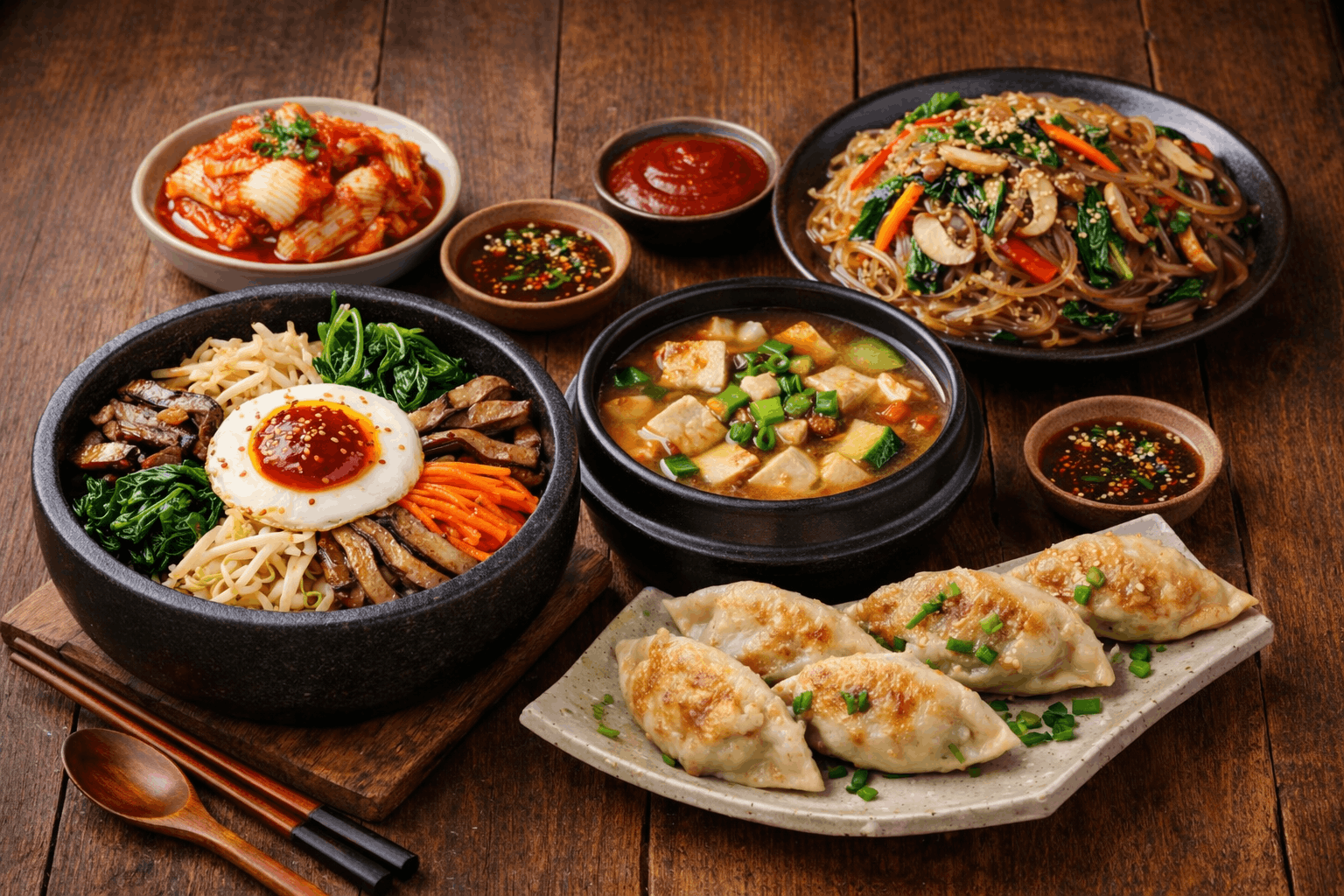
  • Bibimbap – mixed rice with sautéed vegetables and gochujang.
  • Kimchi – fermented cabbage or radish, rich in probiotics.
  • Doenjang Jjigae – soybean paste stew with tofu and vegetables.
  • Japchae – sweet potato glass noodles stir-fried with vegetables.
  • Sundubu Jjigae – spicy soft tofu stew with vegetable broth option.

Quick Meal Favorites


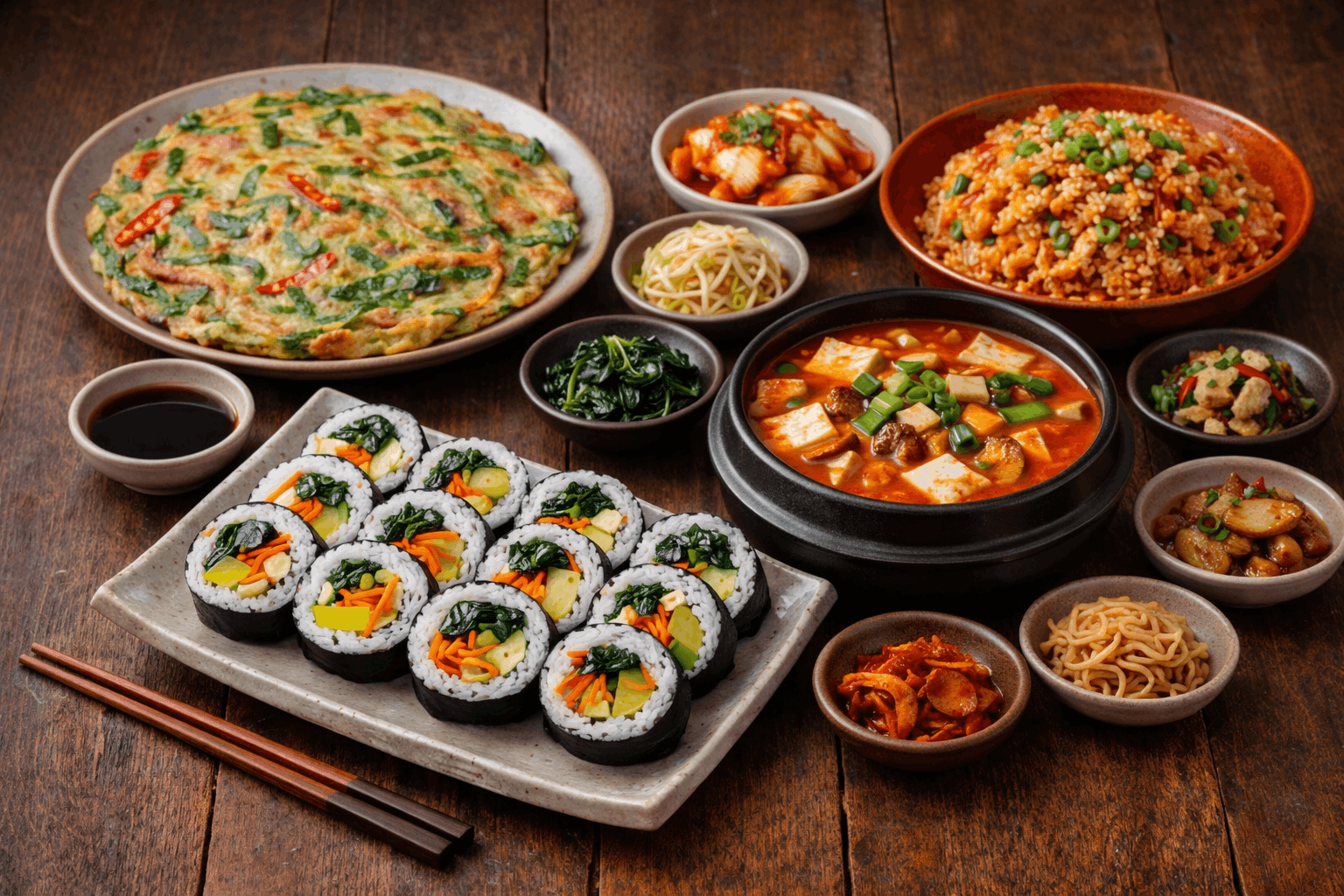
  • Kimbap – rice rolls wrapped in seaweed with vegetable fillings.
  • Pajeon – savory pancake with green onions and other ingredients.
  • Bokkeumbap – hearty Korean fried rice.
  • Banchan – small side dishes that complete the meal.
  • Mandu – Korean dumplings filled with vegetables and tofu.

Special Korean Food Experiences


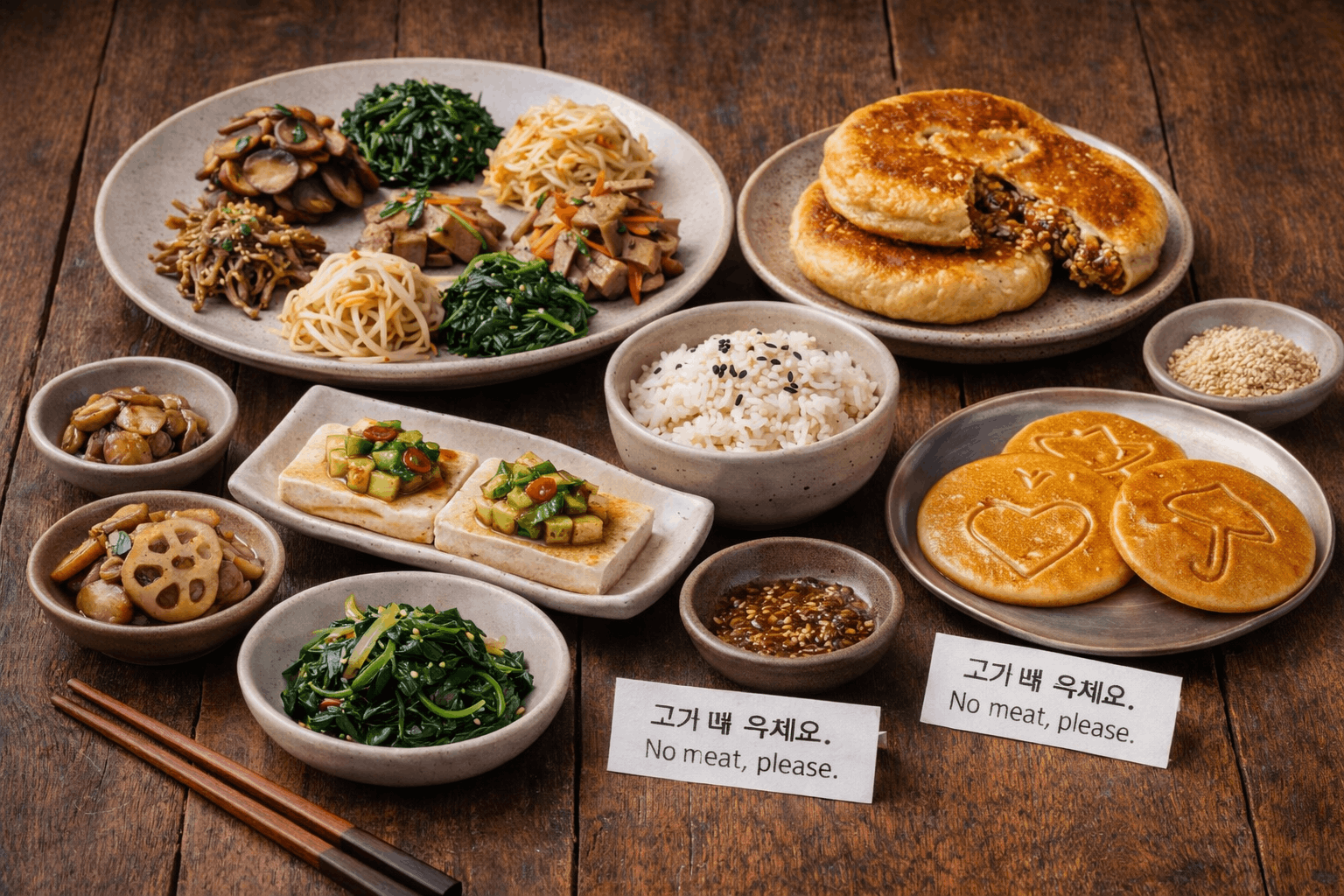
  • Temple Food – vegan or vegetarian dishes without onion or garlic.
  • Hotteok – sweet filled pancake with honey, cinnamon, and nuts.
  • Dalgona Candy – nostalgic street sweet loved for generations.
  • Many dishes are customizable once you understand the ingredients.
  • Learning simple phrases like “no meat” or “no fish” is helpful.

🥗Vegetarian-Friendly Restaurants

Finding vegetarian food in Korea becomes easier once you know the right places. These restaurants are especially helpful for students and travelers looking for reliable options.

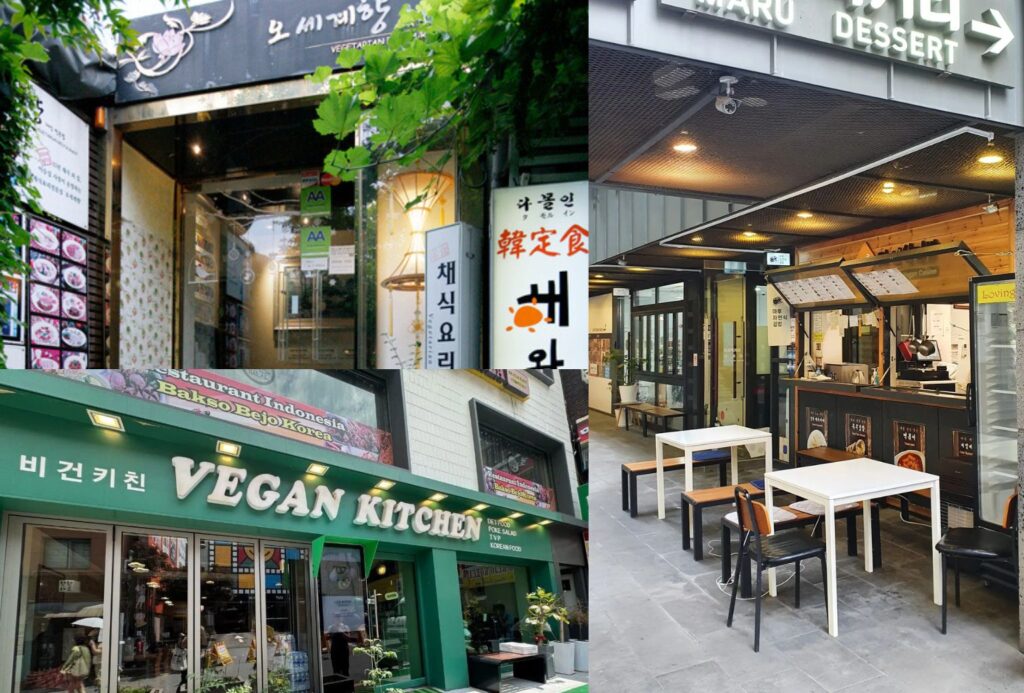
Osegyehyang – Insa-dong, Seoul


Known for plant-based versions of classic Korean dishes in a traditional setting.

Top dish: Soy Protein Bulgogi

Maru JaYeonSik Kimbap – Insa-dong, Seoul


A cozy, budget-friendly vegan spot for Korean comfort food.

Top dish: Vegan Kimbap and Fried Soy Cutlets

Veg Green – Seoul


A vegan buffet offering side dishes, soups, and student-friendly variety.

Top dish: Vegan Kimchi and Stir-Fried Mushrooms

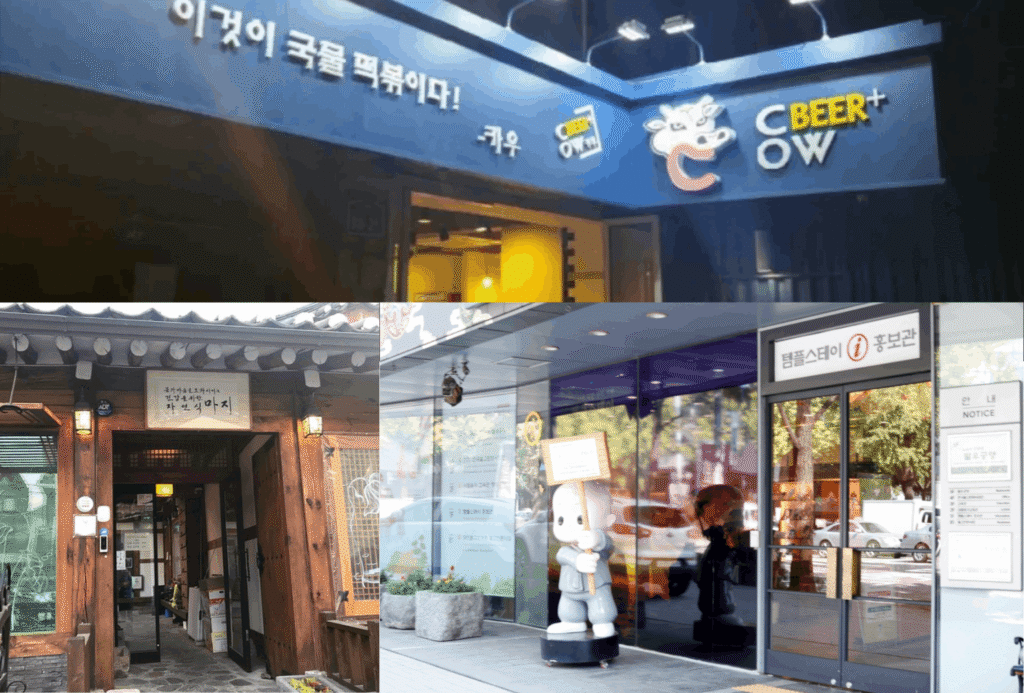
Cow Tteokbokki – Sinchon


Popular near university areas for its dedicated vegan menu and customizable spice level.

Top dish: Vegan Rose Tteokbokki

Maji – Near Gyeongbokgung Palace


A refined temple-food restaurant serving clean, meat-free Korean meals.

Top dish: Lotus Leaf Rice Set

Balwoo Gongyang – Jongno-gu, Seoul


Michelin-recognized Buddhist temple cuisine, ideal for special occasions.

Top dish: Deep-Fried Assorted Mushrooms and Lotus Leaf Rice

Convenience stores like GS25 and CU now offer more plant-based products. Look for the green vegan label on kimbap and lunchboxes.

🎉Korean Festivals

Korean festivals reflect family values, seasonal change, spirituality, gratitude, and community. Many traditional celebrations follow the lunar calendar.

Traditional Festivals


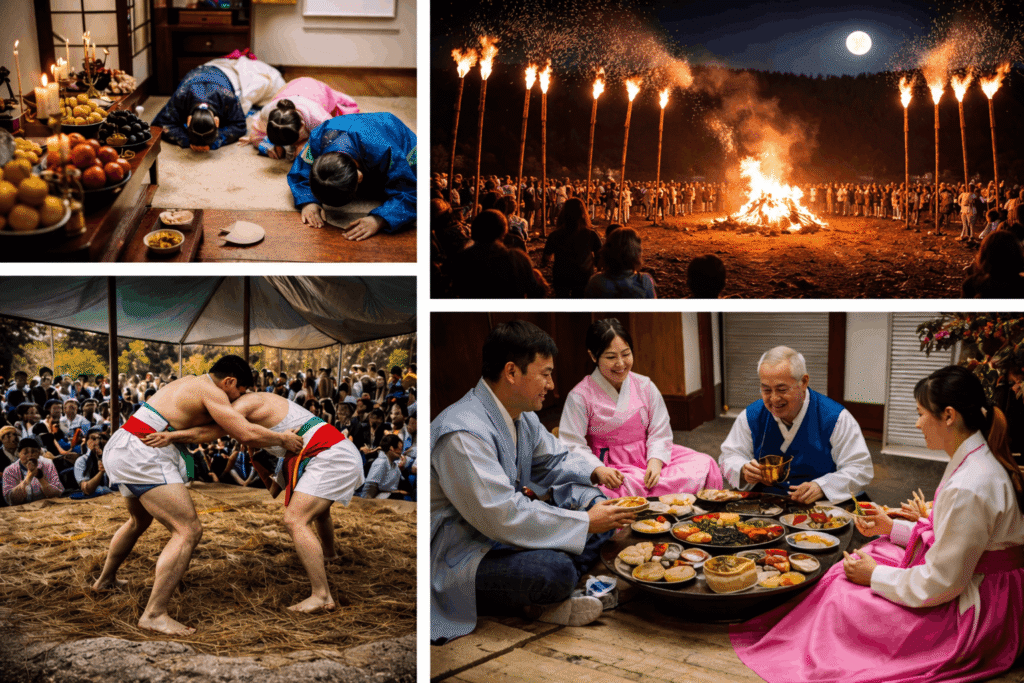
Seollal – Lunar New Year


Celebrated with family gatherings, formal bows to elders, rice cake soup, and ancestor rituals.

Daeboreum – First Full Moon Festival


Marked by nut cracking, five-grain meals, and symbolic fire rituals for good fortune.

Dano


A festival of positive energy, traditional wrestling, herbal customs, and seasonal rice cakes.

Chuseok – Harvest Festival


A major family holiday centered around gratitude, ancestral respect, and harvest traditions.

Dongji – Winter Solstice


Known for red bean porridge traditions believed to protect homes from misfortune.

Modern & Cultural Festivals


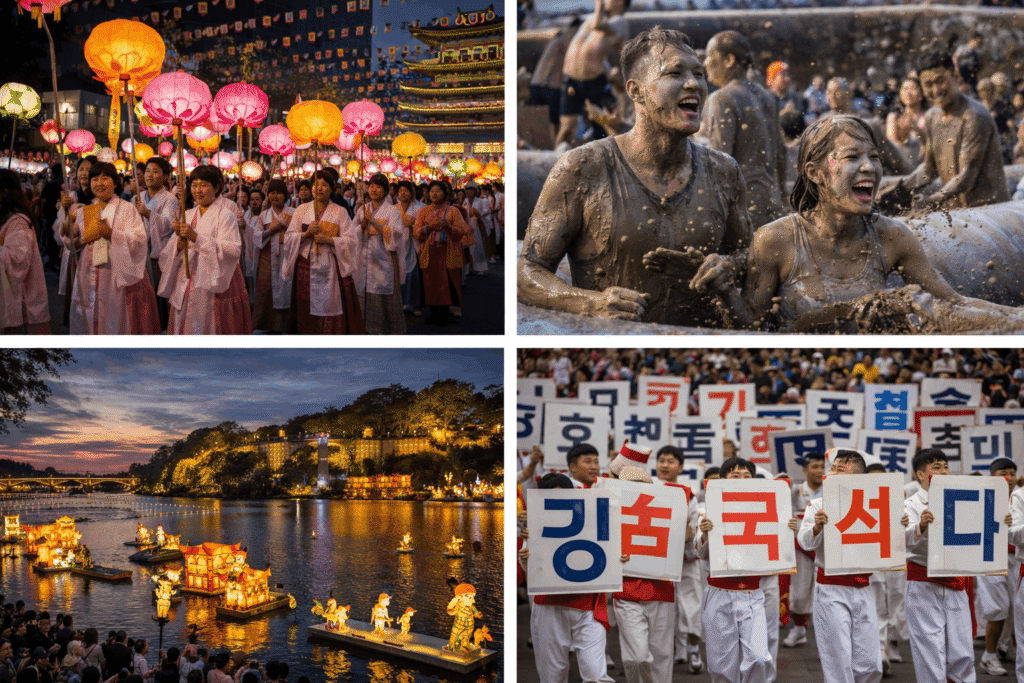
Buddha’s Birthday


Famous for beautiful lotus lantern parades celebrating peace and enlightenment.

Boryeong Mud Festival


A lively summer festival where visitors enjoy mud activities, fun events, and skincare experiences.

Jinju Lantern Festival


Thousands of glowing lanterns create a memorable riverside celebration in autumn.

Hangeul Day


A national holiday celebrating the Korean alphabet and the legacy of King Sejong the Great.

Travel Tip


During Seollal and Chuseok, many businesses close for about three days, so planning ahead is essential.

🛕Temples & Places of Worship

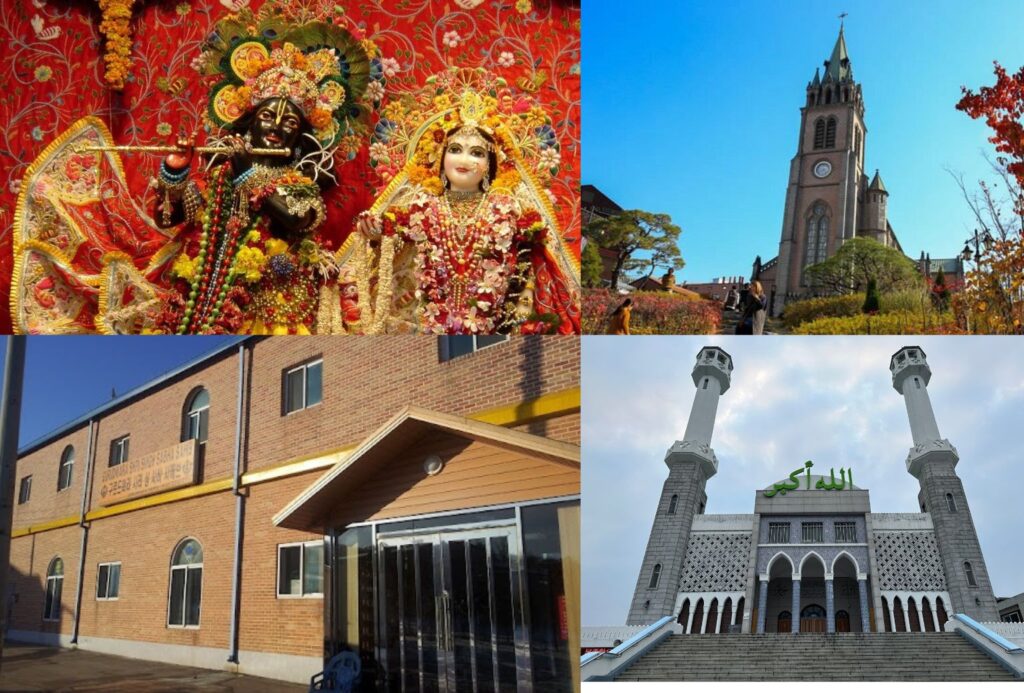
Korea’s spiritual landscape includes Buddhist temples, churches, masjids, Hindu temples, and Sikh places of worship, reflecting both heritage and multicultural communities.

Buddhist Temples


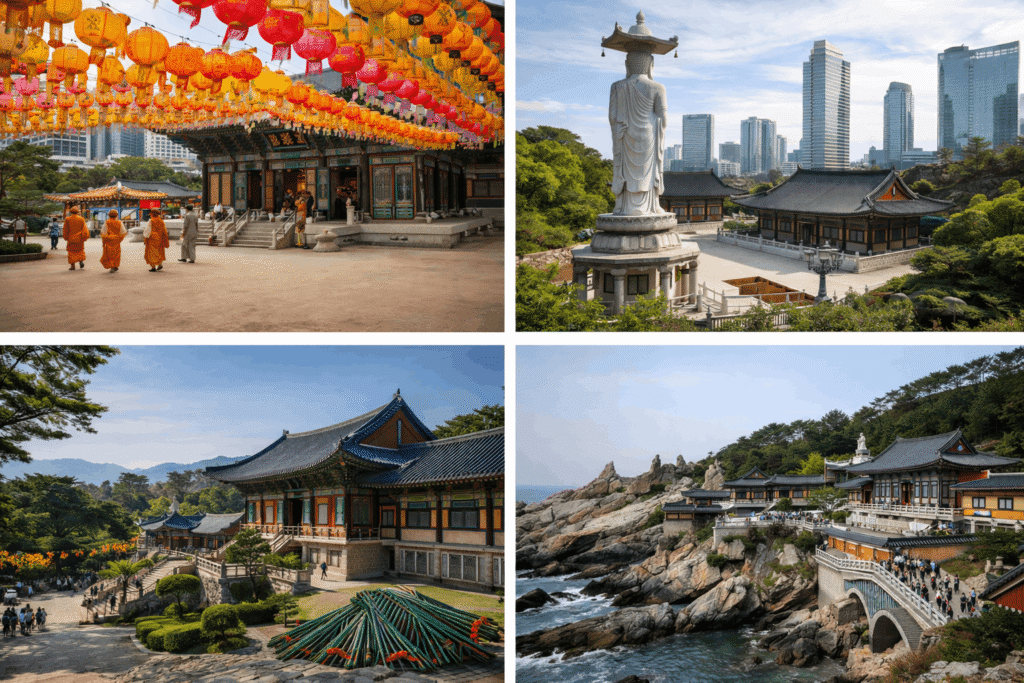
Jogyesa Temple – Seoul

The heart of Korean Buddhism in central Seoul, known for lanterns and peaceful surroundings.

Bongeunsa Temple – Seoul

A calm spiritual space in Gangnam, featuring a striking Maitreya Buddha statue.

Bulguksa Temple – Gyeongju

A UNESCO World Heritage Site and a masterpiece of Buddhist architecture.

Haedong Yonggungsa – Busan

A stunning coastal temple known for its dramatic sea views.

Other Religious Spaces


Shri Radha Shyamsundar Mandir – Seoul

An active Hindu temple in Itaewon offering spiritual programs and vegetarian meals.

Sri Lakshmi Narayanan Temple – Seoul

An important cultural and spiritual hub for the Indian community.

Gurdwara Shri Singh Sabha Sahib – Pocheon

A key Sikh place of worship known for Sunday langar and community support.

Seoul Central Masjid – Itaewon

The first and largest mosque in Korea, surrounded by halal-friendly food options.

Myeongdong Cathedral & Other Churches

Korea also features major churches such as Myeongdong Cathedral, Sarang Church, and Yoido Full Gospel Church.

🗺️ Sightseeing Must-Do Experiences

The best way to understand Korea is to explore both its heritage and its modern rhythm. These places offer meaningful insight into Korean history, identity, and everyday life.

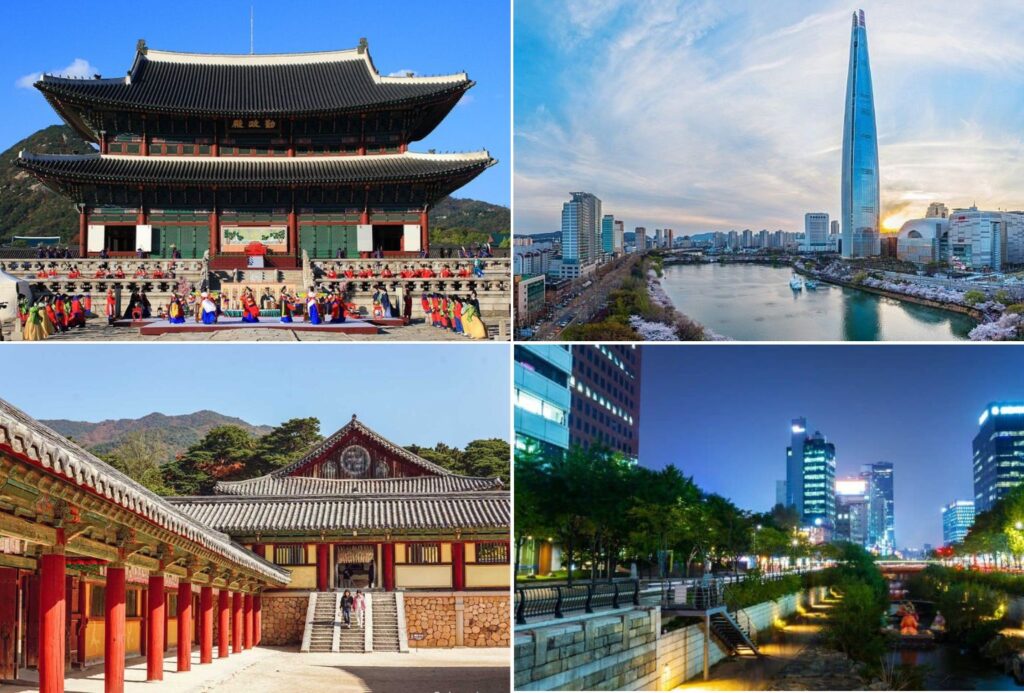
Gyeongbokgung Palace & Bukchon Hanok Village


Wear a hanbok, explore royal architecture, and experience traditional Korean homes.

Bulguksa Temple, Gyeongju


Discover Korea’s Buddhist heritage and the cultural links between Korea and ancient India.

Lotte World Tower & Cheonggyecheon Stream


See the modern side of Korea and the story of its remarkable development.

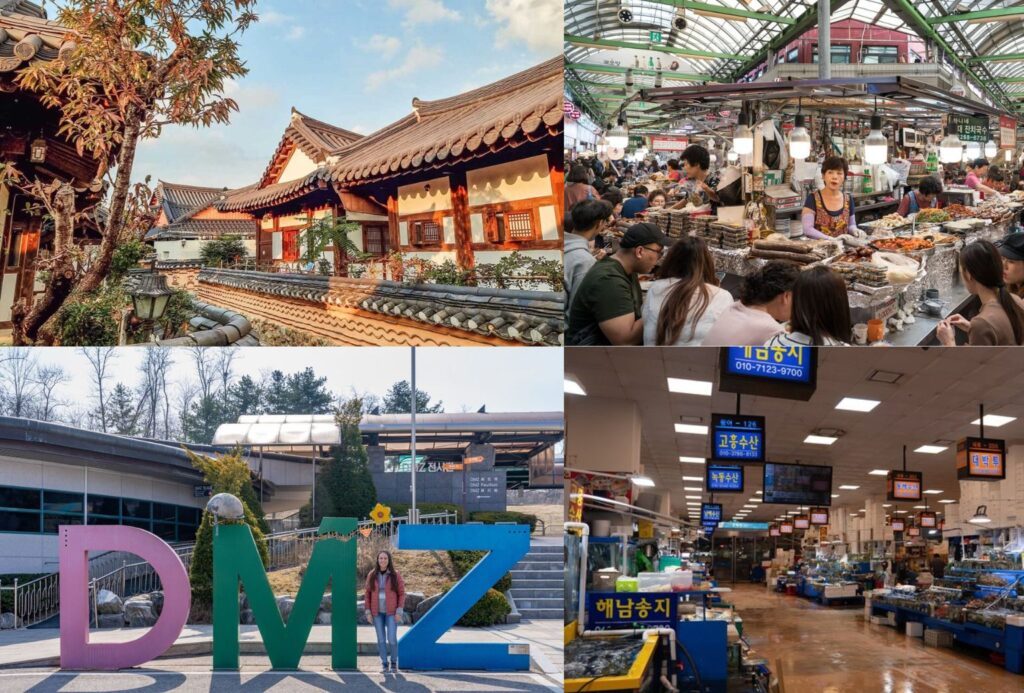
DMZ Tour


Learn about the division of North and South Korea and its continuing impact on society.

Jeonju Hanok Village


Enjoy authentic bibimbap and experience the Korean value of warmth and generosity known as “Jeong.”

Gwangjang & Noryangjin Markets


Experience the lively energy of local markets and everyday Korean street culture.

The Six “Hans” of Korean Culture

A simple way to understand Korean culture is through six key ideas that represent language, food, clothing, homes, writing traditions, and music.

🔤 Hangul
The Korean alphabet

🍲 Hansik
Korean food

👘 Hanbok
Traditional clothing

🏠 Hanok
Traditional houses

📜 Hanja
Classical Chinese characters

🎵 Hanguk-Eumak
Korean music

What are you thinking?

Start your South Korea journey with us today!