

South Korea is one of the most talked-about countries in the world today. Whether you have come across it through K-pop music, Korean dramas, Korean cuisine, or perhaps because you are planning to study in South Korea, this country has something remarkable to offer every person who discovers it.
Situated on the Korean Peninsula in East Asia, South Korea is a nation that balances deep-rooted tradition with some of the most advanced technology and modern culture found anywhere in the world. It is a country where ancient palaces stand in the shadow of glass skyscrapers, where Buddhist monks coexist with tech startups, and where food is treated as both nourishment and art.
This guide covers the most famous things of South Korea in detail — from its cultural exports and historic landmarks to its education system, natural landscapes, and the unique lifestyle that makes Korea so distinctive. Whether you are a curious traveler, a prospective student, or someone already in love with Korean culture, this article will give you a deep understanding of what makes South Korea so iconic around the world.
A Brief Overview of South Korea Before We Begin
South Korea, officially known as the Republic of Korea, covers an area of roughly 100,000 square kilometers on the southern half of the Korean Peninsula. Its capital is Seoul, a megacity of over 10 million people that consistently ranks among the most technologically advanced and livable cities in the world.
The country has a population of approximately 51 million people and an economy that ranks among the top 15 in the world by GDP. South Korea is famous for its rapid economic transformation — a journey from one of Asia’s poorest countries after the Korean War of the 1950s to a global leader in technology, entertainment, and education within just a few decades.
This transformation, often called the “Miracle on the Han River,” is central to understanding why South Korea is so famous today. The values of hard work, education, innovation, and national pride that drove this growth are reflected in every famous thing that Korea is known for.
1. K-Pop: South Korea’s Most Famous Global Cultural Export
When people around the world think about South Korea today, K-pop is almost always the first thing that comes to mind. Korean pop music, commonly known as K-pop, has grown from a domestic music industry into a global phenomenon that influences fashion, language, beauty standards, and youth culture across continents.
K-pop is not simply a music genre. It is a carefully constructed entertainment ecosystem. K-pop agencies train young artists — called idols — for years before their debut, teaching them singing, dancing, foreign languages, stage presence, and public relations. The result is a level of performance polish and visual production that is unmatched in the global music industry.
Groups like BTS, BLACKPINK, EXO, TWICE, Stray Kids, NewJeans, and aespa have earned enormous fanbases across Asia, North America, Europe, Latin America, and beyond. BTS in particular made history as the first Korean group to top the Billboard Hot 100 chart and to perform at the United Nations General Assembly.
The fandoms that form around K-pop groups are among the most dedicated and organized communities in the world. BTS fans, known as ARMY, have set records for streaming, album sales, and social media engagement that rival or exceed those of any other artist globally.
K-pop has also driven a significant increase in interest in the Korean language among young people worldwide. Many international students who choose to explore Korean language and culture courses do so initially because of K-pop. The music draws people in, and Korea’s culture, history, and education opportunities keep them engaged.
The K-pop industry is headquartered primarily in Seoul, particularly in areas like Gangnam and Mapo. Entertainment companies such as HYBE, SM Entertainment, YG Entertainment, and JYP Entertainment operate large complexes there that include recording studios, practice rooms, dormitories, and fan experience centers. Many international tourists visit Seoul specifically to see these buildings and the neighborhoods associated with their favorite artists.
2. Korean Dramas (K-Dramas): Storytelling That Captivates the World
Alongside K-pop, Korean dramas — commonly called K-dramas — have become one of the most famous and widely consumed forms of entertainment produced anywhere in the world. Korean television series have attracted tens of millions of viewers across Asia, the Middle East, Latin America, Europe, and North America through streaming platforms like Netflix, Viki, and Wavve.
What makes K-dramas so appealing is their combination of emotional depth, high production quality, compelling storylines, and the unique cultural backdrop of modern or historical Korea. They cover a wide range of genres, including romantic comedies, crime thrillers, historical epics, fantasy, horror, and social commentary.
Some of the most internationally celebrated Korean dramas include Squid Game, which became the most-watched series in Netflix history in 2021 and introduced global audiences to themes of social inequality and human desperation. Other globally acclaimed dramas include Crash Landing on You, Goblin, My Love from the Star, Descendants of the Sun, Signal, Kingdom, and Itaewon Class.
The global impact of K-dramas goes beyond entertainment. They introduce international audiences to Korean food, fashion, language, landscapes, and customs. Many viewers who watch K-dramas develop a genuine desire to visit South Korea, learn the Korean language, or even pursue studies there. This cultural curiosity is one of the main reasons why Korea’s international student enrollment has grown dramatically over the past decade. Students who want to explore this connection between Korean culture and education will find valuable information on the K-culture section of Study in South Korea.
The Korean film industry, closely related to the drama industry, has also earned global recognition. Bong Joon-ho’s film Parasite won the Academy Award for Best Picture in 2020 — the first non-English language film ever to do so — cementing South Korea’s status as a world leader in visual storytelling.
3. Korean Cuisine: One of the World’s Most Nutritious and Diverse Food Cultures
Korean food is one of the most distinctive, complex, and globally admired cuisines in the world. It is built on a philosophy of balance — balancing flavors, textures, temperatures, and nutrition in every meal. Korean cuisine is rich in fermented foods, vegetables, proteins, and spices, and it has been recognized by nutritionists and food historians as one of the healthiest traditional diets in the world.
The centerpiece of Korean dining culture is the communal meal. Rather than individual plating, Korean meals typically feature a central main dish surrounded by multiple small side dishes called banchan. These may include pickled vegetables, stir-fried greens, seasoned tofu, dried fish, and many other preparations that complement the main course.
Kimchi is the most famous Korean food in the world and is considered a national symbol. It is a fermented vegetable dish — most commonly made with napa cabbage — seasoned with chili paste, garlic, ginger, and salted seafood. Kimchi is served at virtually every Korean meal, and there are over 200 recognized varieties. Its fermentation process creates beneficial probiotics that support gut health, and Korean households traditionally prepare kimchi in large batches during a seasonal event called kimjang, which has been designated an intangible cultural heritage by UNESCO.
Other iconic Korean dishes that have gained international recognition include:
Bibimbap, a bowl of warm rice topped with an assortment of seasoned vegetables, a fried egg, and gochujang chili paste, mixed together before eating. It is celebrated for its balance of nutrition and flavor.
Korean BBQ, known as gogi-gui, involves grilling marinated or unmarinated meats — most commonly beef, pork, and chicken — directly at the dining table over a charcoal or gas grill. Diners then wrap the grilled meat in lettuce leaves with garlic, kimchi, and fermented soybean paste. Korean BBQ restaurants have become popular worldwide, from New York to London to Mumbai.
Tteokbokki is a street food made from cylindrical rice cakes cooked in a spicy-sweet sauce made from gochujang and fish broth. It is one of the most beloved and iconic street foods in Korea, sold by vendors throughout the country.
Samgyetang is a traditional chicken soup made with a whole young chicken stuffed with glutinous rice, garlic, jujubes, and ginseng root. It is particularly popular during the hottest days of summer and is famous for its restorative properties.
Japchae is a dish of stir-fried glass noodles made from sweet potato starch, mixed with a variety of colorful vegetables and sometimes beef, seasoned with sesame oil and soy sauce. It is a fixture at celebrations and family gatherings.
Korean fried chicken has earned a devoted international following for its double-fried technique, which creates an unusually crispy skin, and its variety of flavorful glazes including soy garlic, spicy honey, and yangnyeom sauce.
Korean food culture is inseparable from Korean identity. The act of eating together is a deeply social and relational experience in Korean culture, and sharing food is understood as an expression of care and connection. For international students in South Korea, learning to navigate Korean food culture is one of the most enjoyable parts of life in the country.
4. Samsung, LG, Hyundai, and the Technology Giants of South Korea
South Korea is home to some of the most powerful and innovative technology and manufacturing companies in the world. These companies — known collectively as chaebols, or large family-owned conglomerates — have driven South Korea’s economic rise and positioned it as a global leader in semiconductors, electronics, automobiles, and shipbuilding.
Samsung is undoubtedly the most globally recognized Korean brand. Samsung Electronics is the world’s largest manufacturer of smartphones, memory chips, and televisions. Products like the Galaxy smartphone series and Samsung’s OLED displays are used by hundreds of millions of people worldwide. Samsung’s semiconductor division is the world’s largest producer of DRAM and NAND flash memory, components that power computers, smartphones, and data centers globally.
LG Electronics is another global leader, particularly known for its televisions, home appliances, and OLED display technology. LG has been at the forefront of innovations in screen technology and has established itself as a premium brand in household electronics worldwide.
Hyundai Motor Group, which includes the Hyundai and Kia brands, has grown into one of the top five automakers in the world by volume. Korean vehicles are now associated with reliability, modern design, and increasingly with electric vehicle innovation. Hyundai’s IONIQ series and Kia’s EV6 have received major international awards and helped establish South Korea as a significant player in the global transition to electric mobility.
SK Hynix is the world’s second-largest producer of memory semiconductors, competing directly with Samsung in the global chip market. The importance of Korean semiconductor manufacturers to the global technology supply chain became globally apparent during the chip shortages of the early 2020s.
Korea’s technology sector is not limited to large corporations. South Korea has also cultivated a vibrant startup ecosystem, particularly in Seoul’s districts of Gangnam, Seongsu, and Pangyo — the latter sometimes called the Silicon Valley of Korea. The South Korean government has invested heavily in digital infrastructure, and Korea consistently ranks first in the world for internet speed and connectivity.
For international students interested in careers in technology, engineering, or business, South Korea’s corporate and academic environment offers some of the most competitive and forward-looking opportunities available. You can learn more about academic pathways at leading Korean institutions through our guide on universities in South Korea for international students.
5. Seoul: One of the World’s Most Iconic and Modern Capital Cities
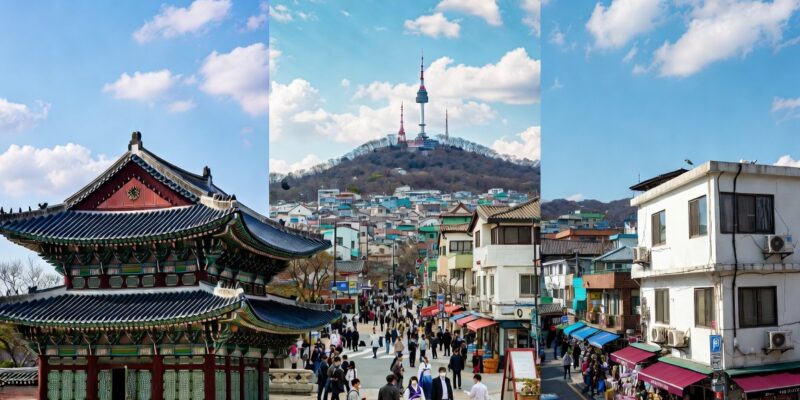
Seoul is one of the most extraordinary cities in the world, and it is central to the global identity of South Korea. As the capital and cultural heart of the country, Seoul is simultaneously ancient and hyper-modern — a place where a 600-year-old royal palace stands directly across the street from a luxury department store, and where narrow traditional alleyways give way to towering glass towers.
With a metropolitan population of over 25 million people, Seoul is one of the largest and most densely populated urban areas on the planet. It is also one of the most connected and efficient cities in terms of public transportation, with an extensive subway system that serves virtually every neighborhood and extends to satellite cities across the greater Seoul Capital Area.
Some of the most famous places and attractions within Seoul include:
Gyeongbokgung Palace, the primary royal palace of the Joseon dynasty built in 1395, is one of the most visited landmarks in South Korea. Its grand ceremonial gates, landscaped grounds, and the famous changing of the royal guard ceremony draw millions of visitors each year. Visitors can rent traditional Korean hanbok costumes and walk the palace grounds in them.
Bukchon Hanok Village is a neighborhood in central Seoul where hundreds of traditional Korean houses called hanok have been preserved. The hanok are characterized by curved rooftops, wooden frames, and courtyards, and the neighborhood feels like a living museum within the modern city.
Myeongdong is Seoul’s most famous shopping and street food district, drawing both tourists and locals to its dense concentration of cosmetics shops, fashion boutiques, and food stalls. It is one of the busiest pedestrian areas in Asia.
Hongdae, named after the Hongik University area, is Seoul’s creative and youth culture hub. It is known for its street performances, indie music venues, art galleries, nightlife, and the bohemian energy of its student population.
N Seoul Tower, built atop Namsan Mountain, offers panoramic views of the entire Seoul metropolitan area and is one of the most recognizable landmarks on the city’s skyline. The tower’s observation deck and surrounding park are popular destinations for locals and tourists alike.
Dongdaemun Design Plaza, designed by the late architect Zaha Hadid, is a strikingly futuristic cultural complex that hosts exhibitions, fashion shows, and design events. It represents Seoul’s ambitions as a global city of design and creativity.
The Han River, which flows through the center of Seoul, is lined with riverside parks where residents jog, cycle, have picnics, and watch fireworks during summer festivals. The Han River parks are a beloved part of Seoul’s urban identity.
6. Traditional Korean Culture: Hanbok, Confucian Values, and Ancient Heritage
Beneath the gleaming modernity of Seoul and the global reach of K-pop lies a rich and ancient cultural heritage that continues to shape Korean identity and daily life. Understanding traditional Korean culture is essential to understanding why South Korea is the way it is today.
The hanbok is the traditional Korean garment and one of the most beautiful and recognizable symbols of Korean heritage. Characterized by vibrant colors, flowing silhouettes, and graceful design, the hanbok has been worn by Koreans for over 1,600 years. Today it is worn during major holidays like Chuseok and Seollal, at weddings and formal ceremonies, and increasingly as a fashionable statement by young Koreans who have embraced a movement to reinvent the garment in contemporary contexts.
Confucian philosophy, introduced to Korea from China during the Joseon dynasty, has profoundly shaped Korean social values and structures for centuries. Key Confucian principles such as respect for elders, emphasis on education, loyalty to family, and dedication to collective harmony are deeply embedded in Korean culture and remain visible in everyday social behavior. These values help explain why South Korea places such extraordinary emphasis on academic achievement and why its education system is among the most rigorous and competitive in the world.
Chuseok is one of Korea’s two most important traditional holidays, equivalent in cultural significance to Thanksgiving in the United States. Celebrated in the autumn on the 15th day of the eighth lunar month, Chuseok is a harvest festival during which Korean families gather, prepare and share traditional foods, perform ancestral rites, and visit ancestral gravesites. The holiday is accompanied by nationwide travel as Koreans return to their hometowns.
Seollal is the Korean Lunar New Year and the other major national holiday. Families gather for ancestral rites called charye, prepare traditional foods, exchange gifts, and engage in traditional games. Children and young people receive money gifts in silk pouches from elders as part of a formal bow called sebae.
Korean traditional arts include pansori (a form of dramatic singing), talchum (masked dance drama), hanji (traditional papermaking), and a vast tradition of celadon pottery and folk painting. Many of these art forms have been designated as UNESCO Intangible Cultural Heritages.
The Korean writing system, Hangul, is one of the most scientifically designed writing systems in human history. Created in the 15th century by King Sejong the Great and his scholars, Hangul was designed to be logical, learnable, and accessible to all people regardless of their education level. It can typically be learned in a matter of days by a dedicated student, and its elegance and functionality have earned it admiration from linguists worldwide. Students who want to learn Hangul as a pathway to study or work in Korea can explore Korean language courses available through Study in South Korea.
7. The Korean Education System: World-Famous and Fiercely Competitive
South Korea’s education system is one of the most famous and closely studied in the world. Korean students consistently rank at the top of international assessments such as the PISA (Programme for International Student Assessment), particularly in mathematics, science, and reading. South Korea’s adult literacy rate is among the highest in the world at nearly 98 percent.
The Korean education system is structured around a high-stakes national college entrance examination called the Suneung (수능), officially known as the College Scholastic Ability Test. This exam, taken once a year in November, determines which universities a student can attend and is considered one of the most consequential single days in a young Korean’s life. The entire country treats the day of the Suneung with enormous gravity — flights are rerouted to reduce noise near testing centers, businesses open late, and police escort students who are running late.
The intense focus on education in Korean society has given rise to a massive private education industry called hagwons (학원) — private tutoring and enrichment academies that students attend after regular school hours to study subjects ranging from mathematics and English to music and art. Seoul has the highest concentration of hagwons in the world, and many Korean students spend more time in hagwons than in regular school.
South Korea is also a highly desirable destination for international students, who are drawn by its world-class universities, generous scholarship programs, and the opportunity to be at the center of Korean culture and innovation. Major institutions like Seoul National University, KAIST (Korea Advanced Institute of Science and Technology), Yonsei University, and Korea University are internationally recognized for their research output and academic rigor.
The Korean government offers numerous scholarship programs for international students, most notably the Global Korea Scholarship (GKS), which covers tuition, living expenses, language training, and airfare for recipients. Indian students in particular have shown increasing interest in pursuing degrees in South Korea, a trend covered in detail in our comprehensive guide on how to study in South Korea after 12th for Indian students.
8. Korean Skincare and Beauty: The Global K-Beauty Revolution
Korean beauty, universally known as K-beauty, is one of the most influential and commercially significant cultural exports of South Korea. Korean skincare philosophy and beauty products have fundamentally changed the way people around the world think about caring for their skin.
The central philosophy of Korean skincare is prevention and maintenance rather than correction. Korean skincare routines emphasize keeping the skin hydrated, protected, and healthy on a daily basis rather than simply treating problems after they appear. This philosophy stands in contrast to much of Western skincare tradition, which has historically been more focused on treatment.
The famous multi-step Korean skincare routine — which in its most elaborate form can involve 10 or more products including cleansers, toners, essences, ampoules, serums, sheet masks, eye creams, moisturizers, and sunscreen — has been widely adopted and adapted by beauty consumers and professionals worldwide.
Korean beauty brands such as Innisfree, COSRX, Laneige, Dr.Jart+, Sulwhasoo, and Etude House have built loyal global fanbases and are now sold in major retailers across North America, Europe, and Asia. Korean sheet masks, BB creams, snail mucin serums, and cushion compacts are among the most widely imitated beauty products in the global industry.
Myeongdong in Seoul is the world capital of K-beauty retail, with hundreds of skincare and cosmetics shops lining its pedestrian streets. It is a pilgrimage destination for beauty enthusiasts from around the world.
K-beauty is also closely tied to K-pop and K-drama culture. The clear, dewy skin of Korean celebrities is part of the broader aesthetic that fans seek to emulate, and Korean entertainers frequently collaborate with beauty brands as ambassadors and product developers.
9. Historic Palaces, Temples, and UNESCO Heritage Sites of South Korea
While South Korea’s modernity is striking, the country also preserves an extraordinary wealth of historical and cultural heritage dating back thousands of years. South Korea has a total of 16 UNESCO World Heritage Sites, each representing a different facet of the country’s long and rich history.
Gyeongbokgung Palace in Seoul, the largest of the five grand palaces of the Joseon dynasty, has already been mentioned but deserves further attention. Built in 1395 at the founding of the Joseon dynasty, the palace compound covers 410,000 square meters and contains 330 buildings at its peak. Much of it was destroyed by Japanese forces during the colonial period of the early 20th century, but major restoration efforts have been ongoing for decades.
Changdeokgung Palace, another Joseon-era royal palace in Seoul, is a UNESCO World Heritage Site specifically cited for the harmony between its architectural design and the natural landscape of the surrounding terrain. Its secret garden, called Huwon, is a 78-acre traditional Korean garden of extraordinary beauty, featuring pavilions, lotus ponds, and ancient trees.
Bulguksa Temple in Gyeongju is one of the most revered Buddhist temples in Korea and a masterpiece of classical Korean Buddhist architecture. Built in the 8th century during the Silla dynasty, the temple complex includes several national treasures including two stone pagodas — Dabotap and Seokgatap — of exquisite craftsmanship. Nearby, the Seokguram Grotto contains a seated granite Buddha statue of astonishing artistic quality, also designated a UNESCO World Heritage Site.
Haeinsa Temple in South Gyeongsang Province houses the Tripitaka Koreana, a complete collection of Buddhist scriptures carved onto 81,258 wooden printing blocks in the 13th century. The Tripitaka Koreana is the oldest and most complete collection of Buddhist canon in the world, carved with extraordinary precision over 16 years. It is stored in specially designed wooden depositories that have naturally regulated temperature and humidity for over 700 years without any modern climate control systems.
Jeju Island is South Korea’s largest island and one of its most beloved tourist destinations. Jeju’s Volcanic Island and Lava Tubes have been designated a UNESCO World Natural Heritage Site for their exceptional geological features, including the Hallasan volcano, the highest mountain in South Korea at 1,950 meters, and an extensive network of lava tube caves. Jeju also has a unique cultural heritage that distinguishes it from the Korean mainland, including the tradition of haenyeo — female divers who free-dive to harvest seafood from the ocean floor — recognized as a UNESCO Intangible Cultural Heritage.
The Historic Villages of Korea — Hahoe and Yangdong — are two well-preserved Joseon-era clan villages that offer a window into the aristocratic culture of traditional Korea. These villages, designated UNESCO World Heritage Sites, contain well-preserved hanok, ancestral halls, and the landscape arrangements that were central to the Confucian concept of an ideal living environment.
10. Taekwondo: Korea’s National Martial Art and Olympic Sport
Taekwondo is South Korea’s national martial art and one of the country’s most enduring contributions to global sport and physical culture. Characterized by its emphasis on head-height kicks, jumping and spinning kicks, and fast kicking techniques, taekwondo is today one of the most widely practiced martial arts in the world, with an estimated 80 million practitioners in 213 countries.
Taekwondo has been a full-medal Olympic sport since the 2000 Sydney Games, and South Korea has been among the most dominant nations in Olympic taekwondo competition. The sport combines physical discipline, mental focus, and respect for opponents — values that reflect broader Korean cultural ideals.
The Kukkiwon in Seoul is the world headquarters of taekwondo and the institution responsible for setting standards for technique, belt promotion, and international competition. It is also open to visitors who want to observe or participate in demonstrations and training sessions.
The World Taekwondo Federation, headquartered in Seoul, governs the sport globally and works with national associations in every continent to grow participation and maintain competitive standards.
Beyond its sporting dimension, taekwondo is deeply connected to Korean national identity and philosophy. Many Korean children begin training in taekwondo from a young age, and the practice is integrated into school physical education programs across the country.
11. Natural Beauty of South Korea: Mountains, Coastlines, and Seasonal Landscapes
South Korea’s natural landscape is exceptionally diverse and beautiful for a country of its relatively small size. Approximately 70 percent of the country’s terrain is mountainous, and the interplay of mountains, rivers, coastlines, and seasonal change creates landscapes of remarkable variety and visual drama.
The country has 22 national parks, many of which protect mountain wilderness areas of extraordinary beauty. Seoraksan National Park in Gangwon Province is arguably the most spectacular, featuring jagged granite peaks, deep valleys, rushing streams, Buddhist temples, and forests that turn brilliant shades of red, orange, and yellow each autumn. Seoraksan is consistently ranked among the most beautiful autumn foliage destinations in Asia.
Hallasan National Park on Jeju Island encompasses the volcanic summit of Mount Hallasan and offers hikers the experience of ascending through multiple climate zones from subtropical forest to alpine meadow in a single day.
Jirisan National Park straddles several southern provinces and is the largest national park on the Korean mainland, with peaks, valleys, waterfalls, and historic temples spread across a vast mountain wilderness.
South Korea’s coastline also offers spectacular scenery. The southern coast along the Hallyeohaesang National Maritime Park features a scattering of over 300 small islands and islets rising from a calm sea, creating landscapes sometimes compared to those of Halong Bay in Vietnam. Boseong in South Jeolla Province is famous for its hillside tea plantations, where rows of dark green tea plants create vivid geometric patterns against rolling hills.
Cherry blossom season, typically in late March and early April, transforms cities and countryside alike into landscapes of delicate pink and white. The cherry blossom festivals held in Jinhae, Yeouido in Seoul, and Gyeongju are among the most photographed events in the country each year.
12. Korean Traditional Music and Performing Arts
Traditional Korean music, known as gugak (국악), encompasses a broad range of musical forms that have developed over thousands of years. Although K-pop dominates global attention, traditional Korean music has a rich and distinctive character that continues to be studied, performed, and celebrated.
Pansori is a form of traditional Korean musical storytelling in which a single performer, accompanied by a drummer, tells a long narrative story through alternating passages of song and speech. Pansori performances can last several hours and require extraordinary vocal power and expressiveness. It has been designated a UNESCO Intangible Cultural Heritage.
The gayageum is a traditional Korean plucked zither with 12 to 25 strings stretched over a curved wooden body. It is one of the most important traditional Korean instruments and has a sound often described as both meditative and deeply emotional. Contemporary Korean musicians have created fusions of gayageum with jazz, classical, and pop music that have gained international audiences.
Samulnori is a form of traditional percussion performance using four traditional instruments — the kkwaenggwari (small gong), jing (large gong), janggu (hourglass drum), and buk (barrel drum). The music is dynamic, rhythmically complex, and energetic, and samulnori performances are a staple of Korean cultural festivals.
The namsadang nori is a traditional form of wandering performers’ folk art that includes acrobatics, puppet theater, clown performances, and musical entertainment. It represents the popular and irreverent side of traditional Korean performing arts.
13. Korean Architecture: From Ancient Palaces to Futuristic Towers
Korean architecture spans an extraordinary range of styles, periods, and purposes, from the graceful wooden palace complexes of the Joseon dynasty to the boldly modernist towers of contemporary Seoul and Busan.
Traditional Korean architecture is characterized by its harmony with nature, its use of local materials including wood and stone, and its spatial philosophy rooted in the geomantic principles of pungsu, the Korean equivalent of Chinese feng shui. The curved rooflines of Korean palaces and temples, with their upturned eaves, are an immediately recognizable aesthetic that distinguishes Korean traditional buildings from those of neighboring China and Japan.
The traditional Korean house, the hanok, is built around an inner courtyard and designed to respond to the Korean climate — with deep eaves to provide shade in summer and ondol (underfloor heating) to keep the interior warm in winter. The ondol heating system, in which hot air or hot water is passed through channels beneath the floor, is one of Korea’s most famous technological contributions to residential design and has been adapted in modern form in contemporary Korean buildings.
Modern Korean architecture has produced some of the world’s most celebrated contemporary buildings. The Dongdaemun Design Plaza in Seoul, designed by Zaha Hadid and completed in 2014, is a 86,574-square-meter futuristic complex with no straight lines, clad in 45,133 aluminum panels and 1,000 stone panels that create a flowing, organic surface. It is one of the most photographed contemporary buildings in Asia.
Busan, Korea’s second city and its largest port, has developed a striking modern skyline along its harbor and has become increasingly recognized as a center of contemporary architecture and urban design.
14. Working and Career Opportunities in South Korea for International Talent
South Korea’s strong economy and the global reach of its major corporations make it an attractive destination not only for students but for international professionals seeking careers in technology, engineering, education, finance, and the creative industries.
The country has a growing demand for internationally educated talent, particularly in sectors related to semiconductors, electric vehicles, biotechnology, artificial intelligence, and Korean language education. Many international graduates from Korean universities go on to work in the country after completing their studies, benefiting from the professional networks and language skills they developed during their time as students.
South Korea has also established programs to attract international talent, including streamlined work visa pathways for graduates of Korean universities and partnerships between Korean companies and international talent pools. For Indian professionals in particular, the opportunities in Korea have grown significantly as Korean companies expand their operations in South Asia. Our in-depth resource on jobs in Korea for Indians in 2026 provides a comprehensive overview of the pathways, requirements, and most in-demand sectors.
The experience of living and working in South Korea is enriched by the country’s extraordinary food culture, the efficiency of its public infrastructure, its safety (Korea is consistently among the safest countries in the world by crime statistics), and the vibrancy of its cities.
15. The Korean Wave (Hallyu): How South Korea Conquered Global Pop Culture
The Korean Wave, known in Korean as Hallyu (한류), is the term used to describe the global spread of South Korean culture that began in the late 1990s and has accelerated dramatically in the 21st century. Hallyu encompasses K-pop, K-dramas, Korean films, Korean food, Korean fashion, K-beauty, and the Korean language itself.
The origins of Hallyu can be traced to the late 1990s when Korean television dramas began to attract large audiences in China, Vietnam, and other parts of Asia. By the 2000s, Korean pop music had developed a devoted following across Southeast and East Asia. By the 2010s, K-pop had broken through to global audiences, and by the early 2020s, Korean cultural products had achieved the remarkable status of mainstream global entertainment.
The South Korean government has actively supported Hallyu through cultural diplomacy, funding for entertainment companies, and promotion of Korean language education through King Sejong Institute centers established in countries around the world. However, many observers note that the authentic quality and creativity of Korean cultural products is the primary driver of their global appeal — government support has amplified a cultural output that earned its audience through genuine excellence.
Hallyu has had measurable economic effects for South Korea. Tourism to South Korea has grown dramatically, with many visitors motivated specifically by their interest in Korean culture. Korean food exports, Korean cosmetics sales, and Korean language course enrollments have all risen substantially in correlation with the growth of K-pop and K-drama popularity.
For students and professionals interested in Korean culture, the K-culture resources at Study in South Korea provide a gateway to exploring the full depth of what Hallyu represents and how it can enrich your academic or professional journey.
16. Korean Sports: Beyond Taekwondo
South Korea has a rich and competitive sporting culture that extends well beyond taekwondo. The country has produced world-class athletes and passionate sporting communities across a range of disciplines.
Archery is one of South Korea’s most successful Olympic sports. Korean archers — particularly Korean women — have dominated Olympic archery competition for decades. The Korean national team has won more Olympic gold medals in archery than any other country, and Korean coaching methods are widely regarded as the global standard for the sport.
Football (soccer) holds a special place in Korean sports culture, particularly since the 2002 FIFA World Cup, which was co-hosted by South Korea and Japan. The Korean national team’s remarkable run to the semi-finals of that tournament — defeating Poland, the United States, Portugal, Spain, and Germany along the way — remains one of the most celebrated sporting moments in Korean history. The K League, Korea’s top professional football division, draws substantial domestic audiences and has produced players who have gone on to compete in Europe’s top leagues.
Baseball is arguably the most popular spectator sport in South Korea in terms of domestic attendance. The KBO (Korean Baseball Organization) league draws millions of fans to stadiums across the country each season, and the atmosphere at Korean baseball games — filled with elaborate choreographed chants, drumming sections, and colorful merchandise — is unlike baseball games anywhere else in the world.
Korean esports (competitive video gaming) is another domain in which South Korea has established global dominance. Korea’s professional gaming culture, particularly around games like StarCraft and League of Legends, is the most developed in the world. Korean esports leagues draw stadium-sized live audiences and online viewerships that rival traditional sports. Several Korean esports players are among the highest-paid and most recognized competitive gamers globally.
Frequently Asked Questions About Famous Things of South Korea
What is South Korea most famous for in the world?
South Korea is most famous globally for K-pop music, K-dramas, Korean food (particularly kimchi and Korean BBQ), technology companies like Samsung and LG, and the broader Korean Wave (Hallyu) cultural phenomenon. The country is also internationally recognized for its education system, its natural beauty, its historic heritage sites, and its rapid economic development — sometimes called the Miracle on the Han River.
What is the national symbol of South Korea?
The national symbol of South Korea is the Taegeuk, which appears at the center of the national flag (the Taegukgi). The flag also features four black trigrams at each corner that represent the classical East Asian philosophical concepts of heaven, earth, water, and fire. The national flower of South Korea is the Hibiscus syriacus, known in Korean as the Mugunghwa or Rose of Sharon. The national bird is the magpie (까치).
Why is Korean food famous around the world?
Korean food is famous around the world for its bold flavors, its extensive use of fermented ingredients, its health benefits, and its cultural depth. Kimchi, Korean BBQ, bibimbap, tteokbokki, and Korean fried chicken have all developed international followings. The global spread of K-dramas and K-pop has also introduced global audiences to Korean food culture by depicting meals and food traditions extensively, making international viewers curious to try the dishes they see on screen.
Is South Korea a good destination for international students?
South Korea is an excellent destination for international students. It offers world-class universities, generous scholarship programs including the Global Korea Scholarship (GKS), a safe and modern living environment, access to cutting-edge research, and the opportunity to immerse oneself in one of the world’s most dynamic cultures. The Korean government actively encourages international student enrollment and has streamlined visa processes and support services for international students. More information for Indian students specifically is available in our guide on studying in South Korea after 12th.
What are the most famous tourist attractions in South Korea?
The most famous tourist attractions in South Korea include Gyeongbokgung Palace, Bukchon Hanok Village, and Myeongdong shopping district in Seoul; Bulguksa Temple and the Seokguram Grotto in Gyeongju; Haeinsa Temple and the Tripitaka Koreana in South Gyeongsang Province; Jeju Island with its volcanic landscape and haenyeo diving culture; Seoraksan National Park in Gangwon Province; and the DMZ (Demilitarized Zone) on the border with North Korea, which is both a historically significant and surprisingly visited attraction.
What is the Korean Wave (Hallyu) and why is it important?
The Korean Wave, or Hallyu, is the global spread of South Korean cultural products including K-pop, K-dramas, Korean films, K-beauty, Korean food, and Korean fashion. It is important because it has fundamentally shifted South Korea’s global image from a country primarily known for manufacturing to one celebrated for creativity and cultural innovation. Hallyu has generated enormous economic value through tourism, exports, and the promotion of Korean language learning. It has also opened doors for international students and professionals by increasing global awareness of and interest in South Korea as a place to live, study, and work. Our K-culture section explores Hallyu in depth.
Can Indian students work in South Korea after graduation?
Yes, Indian students who complete degree programs at Korean universities may be eligible for post-study work visas that allow them to remain in South Korea and work in their field of study. South Korea has growing demand for international talent in sectors including technology, engineering, education, and the creative industries. Our detailed guide on jobs in Korea for Indians in 2026 covers the visa options, in-demand sectors, and practical steps for building a career in Korea.
How difficult is it to learn the Korean language?
The Korean writing system, Hangul, is widely regarded as one of the easiest writing systems in the world to learn. Most motivated learners can read and write Hangul within one to two weeks of dedicated study. The spoken language itself is more challenging and requires sustained practice, but its grammatical structure is regular and logical. Many international students find that living in South Korea accelerates their language learning significantly, and most Korean universities provide Korean language programs specifically designed for international students. You can explore Korean language learning options through our courses section.
What is the best time of year to visit South Korea?
South Korea has four distinct seasons, each with its own attractions. Spring (late March to May) is considered by many to be the most beautiful season, with cherry blossom festivals and warming temperatures. Autumn (September to November) rivals spring for beauty, with spectacular mountain foliage and comfortable weather. Summer (June to August) is hot and humid, with a monsoon season in July and August but also outdoor festivals and beach destinations. Winter (December to February) is cold but often clear, with excellent skiing in the mountains and the unique experience of Korean winter food culture, including hotpot dishes and street food.
What languages are spoken in South Korea?
The official and dominant language of South Korea is Korean (한국어), spoken as a first language by virtually the entire population. English is widely taught in schools and is commonly spoken in major cities and tourist areas, particularly by younger generations and in business contexts. Chinese and Japanese are also commonly studied as foreign languages. For international residents and students, English is generally sufficient for navigation in cities, though learning Korean dramatically enriches the experience of living in the country.
Final Thoughts: Why South Korea Deserves Your Attention
South Korea is remarkable because it operates at multiple levels simultaneously. On the surface, it offers the excitement of K-pop, the visual richness of K-dramas, the flavors of Korean cuisine, and the innovation of its technology sector. At a deeper level, it offers a window into one of the world’s most resilient and cohesive societies — one that transformed itself through collective effort, educational investment, and cultural confidence.
For students and young professionals considering their futures, South Korea represents one of the most compelling academic and career destinations in Asia. Its universities are internationally competitive, its scholarship opportunities are generous, its cities are safe and efficient, and its cultural environment is stimulating and welcoming.
Whether your interest in South Korea began with a K-pop song, a K-drama, a bowl of bibimbap, or a curiosity about one of Asia’s most dynamic economies, this country has the depth and richness to sustain and deepen that interest over a lifetime.
To learn more about studying, living, or building a career in South Korea, explore the full range of resources available through Study in South Korea, including our services for prospective students, our about page, and our contact page for personalized guidance.
Published by Study in South Korea — Your trusted guide to academic and professional opportunities in the Republic of Korea.Share